Well, you need to get the basics right before you think of applying or reaching out to your local council for heating grants. The process with LA flex is normally faster unless you create some hurdles to delay it. You might be saying, “Why would I?” But, it usually happens that applicants show up with incomplete documentation or other strange scenarios that delay the approval or installation process.
In this guide, we are going to explain ways applicants or installers usually cause it to delay and how you can overcome these by applying through ECO Energy Packs.
What Is LA Flex and How Does It Work?
LA Flex is the acronym for Local Authority Flexible Eligibility, and it helps households get hold of energy efficiency grants under the ECO4 scheme for those who don’t meet the standard benefits criteria.
Local councils that publish a Statement of Intent can qualify homes for grants like boiler replacement grant, central heating systems, and insulation measures. The process takes 6-8 weeks at maximum from application to installation. You can further optimize the process to reduce this timeline.
However, if you have any sort of miscommunications or if documentation is not prepared, you can add an extra 2-3 weeks to the process.
Things to Take Care of to Speed Up The Process
It’s less about knowing the process and more about the execution of the process.
Below is the list of things you need to tackle before initiating the application process or contacting the installer.
1. Shortlist the Route You Qualify Through
There are four main routes local councils usually cover; it usually depends on the Statement of Intent each council publishes. The most common and straightforward routes are Route 1 and Route 3. We will be moving forward with explaining the process of these two; you can contact your council for the other two.
Route 1: Low-Income
The low-income group includes homeowners with household incomes lower than £31,000 and an EPC rating of E or lower.
Route 3: Health Conditions
Vulnerable households facing health conditions can qualify for the grants.
The conditions include:
- Cardiovascular disease
- Respiratory illness (COPD, asthma)
- Immunosuppression
- Limited Mobility
You need an NHS certification or a GP letter to verify health conditions.
2. Prepare the Required Documentation
You need to prove 3-4 basic things to qualify for LA Flex grants, including proof of residence, identity, a lower EPC rating, and income or health conditions as per the route you are applying through. To avoid rejection or delays, applicants must complete all required documents before contacting their installer or local council.
Below are the concise details of the documents you need to prepare in advance.
Proof of Residence – Dated Within 3 Months of Submission
Your residence address can be proved with your mortgage papers, council tax bills, or energy bills. Private tenants must provide their tenancy agreement along with the landlord’s permission. Lacking proof of residency results in automatic rejection of the application.
Proof of Identity
As evidence of your identity, you can provide a biometric residence card or permit, passport, or a photo ID driving license.
Energy Performance Certificate (EPC)
Your property must have a valid energy performance certificate with a rating of E or below. This proves your home is energy-inefficient and requires improvement. Ensure the EPC is valid and ready for submission.
Income or Health Route Specific Documents
Applicants qualifying through the low-income route must submit recent payslips, pension statements, or tax returns if self-employed.
Households applying under the health conditions route must submit an NHS certificate, GP letter, or NHS trust letter as proof of eligibility.
3. Contact the Approved ECO4 Installer
Installers like ECO Energy Packs can help you organise documentation and meet eligibility requirements. We apply on your behalf and aim to secure approval as quickly as possible. If objections arise, we work with you to resolve them where feasible.
Five Tactics to Accelerate LA Flex Approval
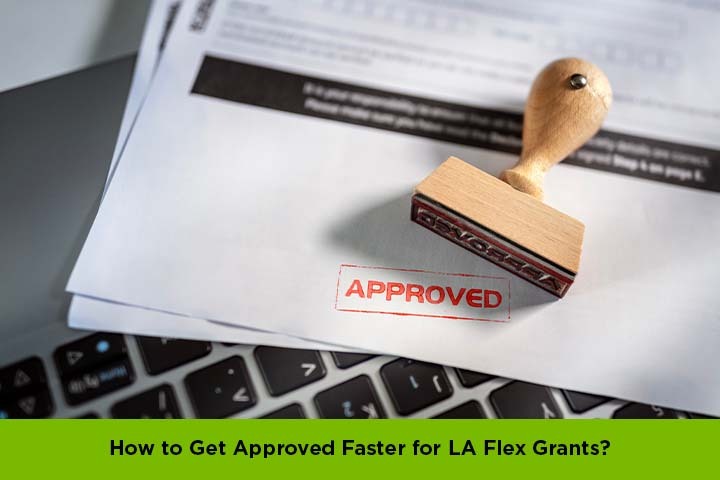
Most applicants wait 8 to 10 weeks for LA Flex approval. That’s ridiculous when you could have it done in 4 to 6 weeks.
The difference? Knowing which levers to pull and when to pull them. Below are five moves that separate fast approvals from endless waiting.
Submit Your Strongest Route First
If you qualify through both income and health, always start with income. Income routes process in 2 to 3 weeks. Health routes take 4 to 5 weeks minimum because councils verify medical evidence with doctors. Most people never try the second route. That’s their mistake, not yours.
Request the Statement of Intent Before Applying
The Statement of Intent (SOI) is your council’s official confirmation they participate in LA Flex. It lists their exact eligibility criteria.
Because councils reject applications when you apply under criteria they don’t accept. Getting the SOI beforehand eliminates this.
Respond to Council Requests Within 48 Hours
Councils don’t wait around. When they ask for extra documents or clarification, your response time determines your approval speed. Answer within 24 to 48 hours. Every time.
Fast responses signal genuine need. Slow responses signal indifference. Councils prioritize applicants who treat this seriously.
Some councils auto-reject applications after 10 to 14 days of silence. They won’t tell you this upfront. They’ll just close your file and move on.
Appeal Rejections With Corrected Evidence
Getting rejected isn’t the end. It’s just round one.
68% of appeals succeed when you resubmit with stronger evidence. Most rejections happen because of fixable documentation errors, not actual ineligibility.
What Are the Most Common Rejection Reasons?
| Rejection Reason | Fix |
| Weak medical documentation | Get a detailed GP letter with diagnosis dates |
| Outdated EPC rating | Request a new EPC survey (costs £60–£100) |
| Missing proof of address | Submit council tax bill or utility statement |
| Income threshold unclear | Provide 3 months of bank statements |
Identify your exact rejection reason. Fix it. Reapply within 4 weeks using corrected documents.
Should You Use a Different Installer?
Not necessarily. If your installer is competent, stick with them. They already know your application details. Switching just adds confusion.
But if they gave bad advice that caused the rejection, find someone better.
The Final Word
LA Flex Scheme approval speed depends entirely on documentation prep and route selection. Start with complete paperwork. Choose your fastest qualifying route. Select a registered installer. Respond instantly to council requests.
This approach reliably compresses timelines to 4 to 6 weeks instead of the standard 8 to 10 weeks. You get free heating improvements months faster than applicants who treat this casually. The system rewards people who understand how it works, and learn more about how to apply for la flex scheme in uk. Now you do.
FAQs
Yes, private tenants might qualify for LA flex grants if the local council states in their Statement of Intent that they are giving grants to private renters. So, you can check the SOI and most probably, private tenants might qualify.
No, the limit of £31,000 household income only applies to the low-income route. If you qualify through some other route, you don’t need to meet the lower income threshold. However, you do need to meet the lower EPC criteria to qualify and get approval.
That’s correct, there are literally no costs involved in installing heating solutions through LA flex grants. Instead, the grants cover all the costs of the heating system, insulation, installation costs, and labour costs. So, you just need to provide all the necessary documentation and leave the rest to your installers.
That’s probably due to a lack of documentation. You should get the specific reason for rejection from your installer, clear the objections, and apply again within 4 weeks. Unless there’s a major issue, 68% of applications usually succeed after resubmission.