As energy bills continue to rise across the UK, making your home more energy-efficient is more important than ever. The fourth phase of the government’s energy-efficiency support scheme, the Energy Company Obligation (ECO4), runs from April 2022 to March 2026 and offers free or heavily-subsidised improvements for eligible households. This guide walks you through ECO4 qualifying benefits, how households can claim upgrades, the types of properties that qualify and how pensioners and households in England and Scotland can access support.
What is the ECO4 scheme?
ECO4 is the latest phase of the UK government’s energy-efficiency initiative. Under this scheme, large energy suppliers are required to fund measures that help the most inefficient homes become warmer, healthier and more economical to run.
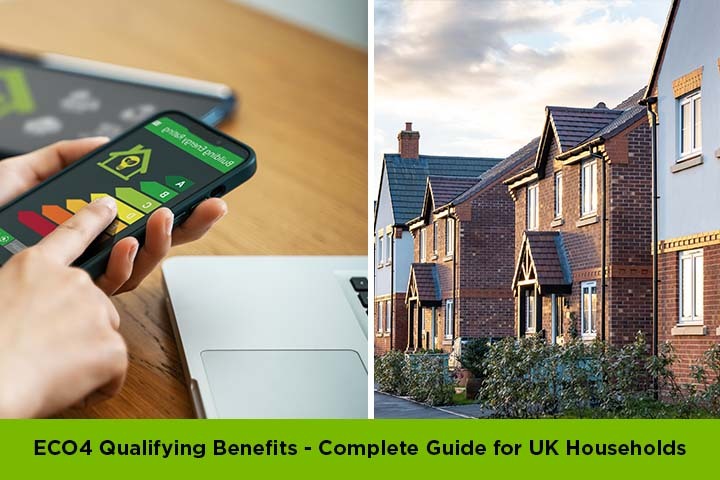
The scheme targets homes with an Energy Performance Certificate (EPC) rating of D, E, F or G—meaning they are less energy-efficient—and prioritises those on low incomes or receiving certain benefits.
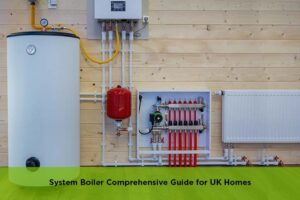
Homes that qualify may receive insulation, upgraded heating systems (like a new boiler or air source heat pump), or other upgrades that they otherwise could not afford.
Qualifying Benefits Under ECO4
One of the key eligibility pathways for ECO4 is claiming certain income-based or means-tested benefits. If you (or someone in your household) receive at least one qualifying benefit, you may be eligible. The main benefits include:
- Income-based Jobseeker’s Allowance (JSA) – the variant tied to income, not contribution-based.
- Income-related Employment & Support Allowance (ESA) – again, the income-related version.
- Income Support (IS) – for individuals on very low income.
- Universal Credit (UC) – for those on a low income or out of work (subject to meeting other criteria).
- Working Tax Credit (WTC).
- Child Tax Credit (CTC).
- Housing Benefit.
- Pension Guarantee Credit (sometimes called Pension Credit Guarantee).
- Pension Savings Credit (Pension Credit Savings).
It is useful to have all your benefit award letters handy when applying, as the installer or provider will need to verify them.
Qualifying Benefits for ECO4
| Benefit | Description |
| Income-based JSA | For people actively seeking work and dependent on means-tested JSA. |
| Income-related ESA | For those unable to work because of illness or disability and need support. |
| Income Support (IS) | For low income individuals not required to sign on for JSA. |
| Universal Credit (UC) | Low income or unemployed households can qualify. |
| Working Tax Credit (WTC) | Support for low income workers. |
| Child Tax Credit (CTC) | Support for households with children on low income. |
| Housing Benefit | Helps with housing costs for low income households. |
| Pension Credit Guarantee | For pensioners on low income. |
| Pension Credit Savings | Additional support for older pensioners. |
ECO4 Qualifying Benefits for Pensioners
Pensioners can be included in the ECO4 Scheme through the Pension Credit (Guarantee & Savings) elements. The scheme is open to older households with low incomes, even if the household members are not employed or receive benefits for working age. Pension Credit Guarantee recipients, for example, are eligible to receive free heating or insulation upgrades. This is especially useful for those pensioners who live in houses that are poorly insulated or have high energy costs.
Property and Region Eligibility: England, Scotland & Property Types
The scheme is available in England, Scotland and Wales. (But for simplicity’s sake this guide will focus on England and Scotland).
The property must also meet the criteria for property type, energy efficiency and household income/benefit. The home will usually have an EPC of D, E or F, which means it is inefficient.
The following types of property are eligible under ECO4: detached house, semi-detached bungalow, end terrace house or bungalow, mid-terrace home; maisonette; ground floor flat or top floor flat.
Examples of Eligible Property Types Under ECO4
| Property Type | Notes |
| Detached house or bungalow | Single-family home, detached from others. |
| Semi-detached house or bungalow | Share one wall with another. |
| End-terrace house or bungalow | Last house in a terrace row at one end. |
| Mid-terrace house or bungalow | Middle house in a row of terraced homes. |
| Maisonette | Flat (often spanning two floors) in a larger building. |
| Top-floor or ground-floor flat | Flat in a building, either at top or bottom level. |
ECO4 Qualifying Benefits List - Summary
The full list of benefits that are often cited is Income-based JSA (Job Support Allowance), Income Support (Income Support), Child Tax Credit (Working Tax Credit), Universal Credit (Universal Credit), Housing Benefit (Guarantee & Savings), Pension Credit (Guarantee & Savings), a Child Benefit and Child Benefit (in certain cases).
Note: The Child Benefit is more complicated. It may be eligible, but only if the household income falls below certain thresholds.
You may qualify for the benefits route if you are eligible for any of the benefits listed.
How to Apply and What Upgrades You can Receive
After eligibility has been established, you (or your installer), contact a provider authorised for ECO4 upgrades. The installer will survey your home and assess the EPC rating, or arrange one if it is missing. They then determine which measures are required to achieve the energy improvement.
The “fabric-first” approach is used to treat homes. Priority is given to insulation (lofts, cavity walls, solid walls) before major upgrades of heating systems. According to the results of the survey, you might be offered loft insulation, cavity wall insulation or a new condensing heating system.
The upgrades could be funded in full (i.e. at no cost) if the survey shows that your home is not energy efficient (EPC D/E/F/G), and you pass the test for benefits/income. After the work has been completed, you will receive an updated EPC that shows the improvements. You can also expect to enjoy lower energy bills as well as a warmer house.
Priority Considerations & Why Act in 2025
The cost of energy has increased dramatically. Some homes have seen an increase of 60% or more in the last few years.
ECO4 runs until March 20, 2026. If you are eligible, then 2025 is the best year to take action. The funding is allocated based on the first-come, and homes that are older or have low energy efficiency get priority. If you delay, your chances of receiving fully-subsidised upgrades could be reduced.
Participating in energy-efficiency programmes can also reduce your energy bill by as much as 25-30%. It makes sense to submit an application if you meet the EPC and benefit criteria.
Why Choose a Trusted Partner for Your ECO4 Upgrades
It can be difficult to navigate the ECO4 app, arrange the home survey and manage documentation. Working with a trusted supplier is advisable. Eco Energy Packs, for example, is a partner that offers free upgrades to households who qualify through the ECO4 program. You can be assured that the work will be completed to the highest standard and fully funded (if you are eligible).
FAQs
Yes. LA Flex extends eligibility to those not on benefits through income and health checks.
You can get insulation, a boiler, or other heating system upgrades to improve efficiency.
The installer verifies your income, EPC, and health details before submitting to your council.
Yes, but rules vary by council. Each local authority sets its own eligibility criteria.
Contact a local ECO4 installer or fill out a form online to check your eligibility.