Ground Mounted Solar Panels UK: Costs, Benefits & Rules

Ground Mounted Solar Panels UK

Table of Contents

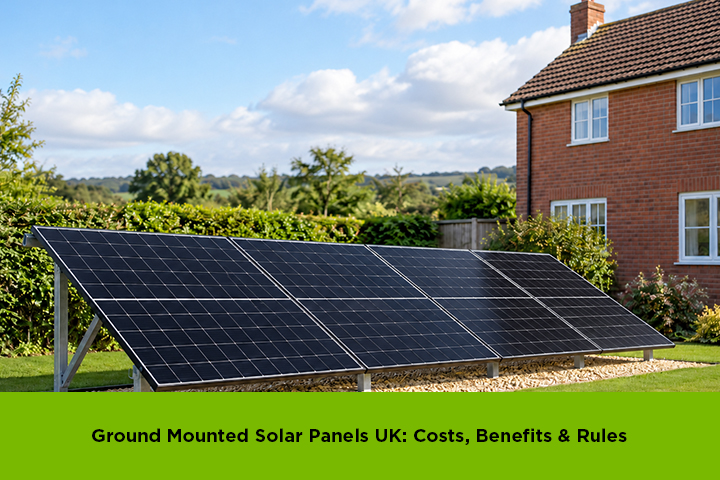
Ground mounted solar panels give more flexibility in contrast to rooftop-mounted solar systems. In this case, the system uses open spaces like garden areas or land to produce electricity. The installation can provide an easy way to orient the panels according to the best direction for power gain, if there is enough sunlight. Also, such systems can be easier to clean and maintain.

An installation of 4 kWp can cost from £8,000 to £12,000. The cost depends on equipment used, state of the ground, required labour and cable distance.

Cost of the installation may be bigger in comparison with rooftop-based system. However, the installation can be used for the houses, which have roofs unsuitable for solar panels. Next, this article describes costs, space requirements, advantages, installation and regulations for UK.

Ready to cut energy costs? Discover how solar panels save money on electricity bills with our practical guide.

What Are Ground-Mounted Solar Panels?

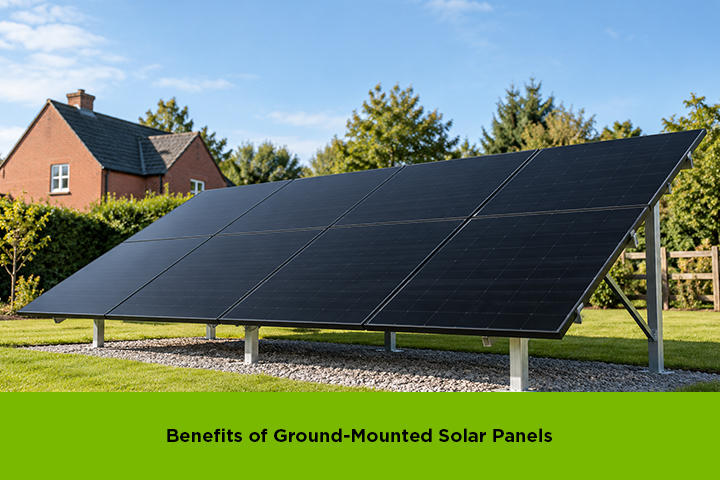
The ground-mounted solar system includes the panels installed on frames that are fastened on the ground. Like traditional solar panels, the equipment produces electricity. The panels are connected to the inverter and home electrical system. Also, batteries can be used for energy storage and using more energy produced during sunny days.

A ground-mounted system works better on the open sunny ground since all objects on the ground may lower the output of the system. It is possible to install panels in gardens but the recommendation is to avoid shade and southern direction of the system.

Ground-Mounted Solar Panel Costs UK

Ground-mounted solar usually costs more than rooftop solar. Extra work is needed to prepare and connect the system. Typical estimated costs can include:

System sizeEstimated cost
3–5kW£6,500–£12,000
4kWp£8,000–£12,000
6kWp£9,000–£13,000
10kWp£12,000–£18,000
6–10kW£12,000–£20,000

These estimations are made by the planning department and not the installation cost. Actual prices will differ depending on the house and the company chosen.

The mounting system increases the cost of installation in comparison with the rooftop system by 15-35%. Additional work includes installing the screws on the ground, creating foundation, trenching and additional cable cost.

The distance between your panels and home also affects the price. Energy Saving Trust says ground-mounted costs are harder to predict.

For a detailed breakdown of costs, read our guide on install solar panel cost UK to understand the expenses involved in installing solar panels at your property.

Switch to Renewable Energy, Start Big Savings

Sunshine is free. Your energy bill shouldn’t be. A solar PV system built for British weather could cut your annual costs by up to £1,080.

How Much Space Do Ground Solar Panels Need?

The ground-mounting requires the open space surrounding the array of panels. As an estimation, for a system 4kW will require 30–40m². In some cases, more ground may be necessary due to the positioning of panels. In addition, space is required around the frames for maintenance work.

In estimation, 7–10m² are required for 1kW of panels. The exact space requirement may vary depending on the size, tilt and space between panels. Choose locations without shade created by trees, buildings, fences, or other objects on the ground.

Benefits of Ground-Mounted Solar Panels

Benefits of Ground-Mounted Solar Panels

Better Panel Positioning

For the ground mounting, there is more freedom in choosing the orientation of the panels. Usually, installation provides the possibility to put them in south orientation. Also, you can set the tilt angle for your system. That allows increasing annual energy production in comparison with incorrectly positioned rooftops.

Better Airflow Around Panels

Solar panels become less efficient when their temperature rises. Ground-mounted panels can have good airflow behind their surfaces. That can help panels to have a lower temperature during hot and sunny weather. But actual improvements will depend on the system design.

Easier Cleaning and Maintenance

Panels installed on the ground can be more easily accessible in comparison with rooftop-mounted panels. That makes maintenance of panels easier. Usually, access to the roof will not be necessary for the routine maintenance of the panels. But electrical work should be done only by a specialist.

Suitable for Difficult Roofs

Ground solar can help when your roof is unsuitable. This includes roofs with heavy shade or poor orientation. It can also suit roofs with limited usable space. A separate ground array gives you another installation option.

Flexible System Expansion

A suitable site may provide room for additional panels. Expansion of the system can require additional planning permission. Always check the available space in the selected area before choosing the size of the system.
Ground-Mounted Solar Panel Rules UK

* Ground-Mounted Solar Panel Rules UK

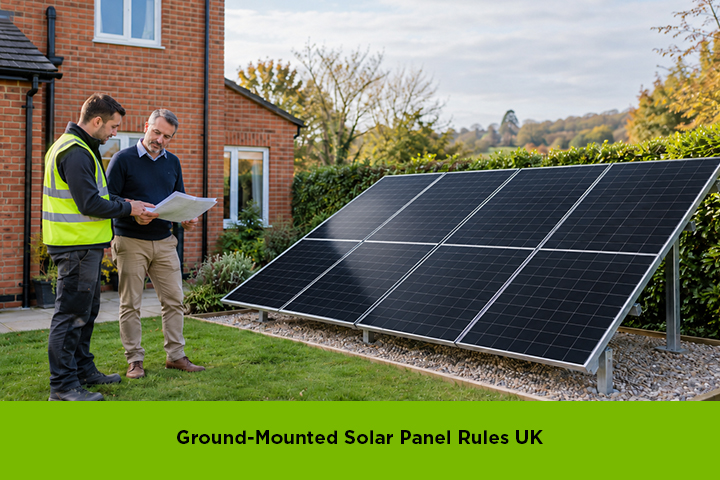
Regulations for planning depend on your place of living and property. Planning regulations may differ in England, Wales, Scotland, and Northern Ireland. The regulations listed below are related mainly to England. You always need to check your local rules before starting the installation work.

New England planning regulations took place since 27 August 2026. In some cases, home installations may have a set of permitted rights. There are restrictions on height, location, and size of the array.

In general, stand-alone solar installation must meet a number of conditions. These include a maximum panel surface area of 9m². The installation generally cannot exceed 4 metres in height. It must also normally remain at least 5 metres from boundaries.

Listed buildings and scheduled monuments have additional restrictions. Conservation areas can also require additional planning checks. Large domestic ground arrays may therefore need planning permission. Always confirm your system installation regulations with the local planning authority.
Ground-Mounted Solar Installation Process

* Ground-Mounted Solar Installation Process

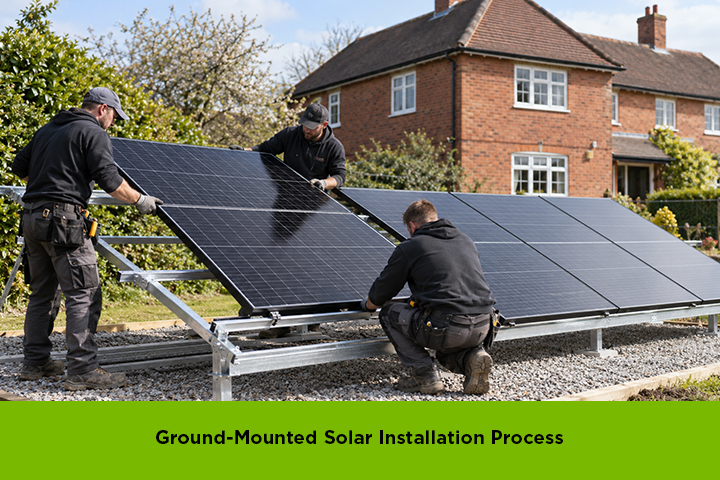
Professional installation usually starts with the analysis of the site. The installer analyses the light availability, state of the ground, access to the panels and cable layout. Then, the installation is designed on the basis of the chosen site. The installation base may be made using ground screws, piles, concrete or ballast systems.

Installers then position the solar panels on the frame. Also, the cables should be installed, connecting panels to the inverter and home system. For underground cables, the trenching will be necessary between the array and the building. The depth of the trench will be defined by type of cable and design.

Your installer should confirm the correct requirements before digging. They should also identify your local DNO requirements.
Grid Connection and Export Payments

Your solar system may need approval from your local DNO. The correct notification depends on the system’s electrical design. Smaller systems may use G98 notification requirements. Larger systems may require G99 approval before connection.

Your installer should manage the appropriate DNO process. You can also export unused electricity to the grid. The Smart Export Guarantee, or SEG, supports eligible exports.

SEG suppliers pay eligible generators for exported renewable electricity. MCS certification can help meet eligibility requirements for SEG payments. Check your installer and system requirements before installation.

Is VAT Charged on Ground-Mounted Solar?

Qualifying solar installations currently benefit from 0% VAT. This temporary zero rate applies until 31 March 2027. The rules depend on the installation and property circumstances. Ask your installer how VAT applies to your project.

Are Ground-Mounted Solar Panels Worth It?

The ground-mounted solar panels may be suitable for your property. They provide flexible placement and easier access to the system. However, their cost is higher than of rooftop solar installation. You also require suitable open space and lack of shading.

Your savings will be different depending on the system capacity and electricity consumption of your household. The location and availability of sunlight are very important for annual output of your system. Increasing consumption of produced electricity also leads to additional savings. Export payments can provide additional value for unused electricity.

A professional solar survey can provide more accurate savings estimates.

Conclusion

Ground-mounted solar panels can be a strong UK home energy option. They work great in the situations where installation of solar panels on the roof is impossible. These systems provide flexible installation, access and good airflow. But they need open space and good planning.

The cost of ground mounted solar starts with £6,500 for small systems. Cost for bigger systems may be about £20,000 or even higher. Always check the planning rules before installation. Installer will analyse your property and its requirements.

For expert guidance, Eco Energy Packs provides professional solar panel installation services to help you plan your solar setup.

Frequently Asked Questions

Are ground-mounted solar panels cheaper than roof panels?

Usually, no. Ground mounting often costs more because of additional installation work.

How much does a 4kW ground solar system cost?

A typical estimate is around £8,000 to £12,000. Your actual quote depends on the site and system design.

How much land does 4kW solar need?

A 4kW system may need around 30–40m² of clear ground. The exact requirement depends on panel layout and spacing.

Do ground-mounted solar panels need planning permission?

Sometimes. Smaller systems may qualify for permitted development rights. Larger systems can require planning permission.

Can ground solar panels get SEG payments?

Eligible solar PV systems in Great Britain can receive SEG payments. Your installation must meet the scheme’s requirements.

Are ground-mounted solar panels suitable for gardens?

Yes, if enough suitable space is available. The area should have good sunlight and minimal shading.

What is the lifespan of ground-mounted solar panels?

Solar panels commonly operate for many years with proper maintenance. The mounting structure and inverter may have different lifespans.

Is ground-mounted solar worth it in the UK?

It can be worthwhile where land, sunlight, and system design are suitable. Compare installation costs against expected savings before deciding.