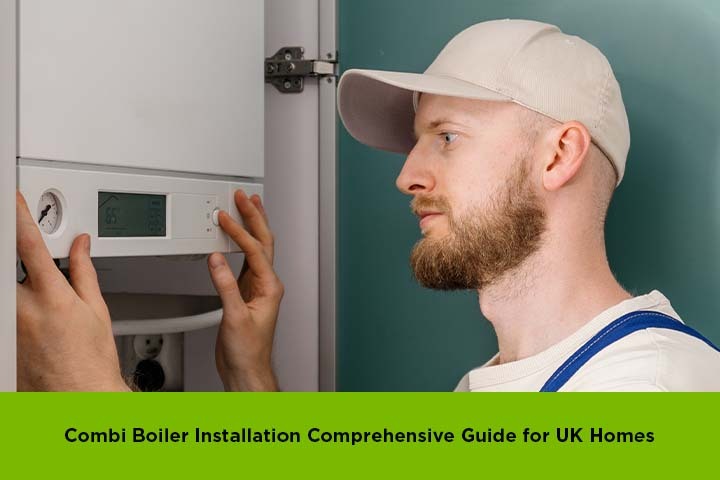
Combi boilers are modern heating systems that don’t require water tanks to store hot water. Instead, it provides hot water and heating on demand. This helps this system save on energy bills because it’s not using fuel to heat water that will not be used.
We have compiled this guide for homeowners looking to replace their heating systems. Combi boilers are the best possible heating systems available in the market right now, and we will be giving arguments in favour of this reality.
What Is a Combi Boiler?
A combi boiler (combination boiler, if you’re formal) handles both central heating and hot water from one compact unit. No storage tank. No separate hot water cylinder taking up your airing cupboard. Just instant heating and hot water when you need it.
Most UK homes now run on combi boilers. Why? Because they work. The combi boiler heats water directly from the mains on demand. Turn the tap. Get hot water. Simple.
How Does a Combi Boiler Work?
When you open a hot tap, the boiler fires up and heats water directly from the mains through a heat exchanger. Cold water enters, passes through heated copper or aluminium coils, and exits hot. The process takes seconds.
The same unit handles your radiators. A diverter valve switches between heating modes. Need hot water? The valve prioritises that. Want the house warm? Back to heating mode.
Different Types of Boiler: The Quick Truth
Not all boilers are created equal. Here’s what separates the type of boiler options across the UK:
| Boiler Type | Storage Tank? | Best For | Flow Rate |
| Combi | No | 1-3 bed homes | Limited by mains |
| System Boiler | Yes (cylinder) | Larger homes, high demand | High |
| Conventional Boiler | Yes (tank + cylinder) | Period properties, existing systems | High |
The combi boiler for your home wins on space and cost. System boilers win on flow rate for larger families. Conventional boilers? Only if you’re stuck with one already.
Benefits of Combi Boilers (And the Trade-Offs)
Let’s cut through the sales pitch. Combi boilers dominate UK homes for good reasons—but they’re not perfect for everyone.
The Wins:
- Space: No hot water cylinder means more storage space
- Cost: Lower professional installation costs (simpler pipework)
- Efficiency: Modern combi models hit 92-95% efficiency ratings
- Speed: Instant hot water—there’s no need to wait for tanks to heat
The Catches:
- Flow rate drops with multiple taps running simultaneously
- Performance depends on mains pressure (usually fine across the UK)
- Not ideal for homes with 4+ bathrooms running hot water at once
Why Switch to a Combi Boiler?
Still running a conventional or system boiler from 2010? You’re wasting roughly £200-300 annually on excess energy bills. The best combi boilers available now operate at efficiency levels your old system can’t touch.
Plus, you reclaim that space. The need for a separate hot water cylinder disappears. That’s an extra cupboard for actual storage.
When a Combi Boiler Might Not Work
Be realistic about your UK home setup. Got four teenagers showering simultaneously every morning? A combi boiler will probably struggle. The flow rate limitation is real.
Homes with more than three bathrooms often need the higher flow rates that system boilers provide. If that’s you, don’t force a square peg into a round hole.
Sizing Your Boiler: What Boiler Do I Need?
Wrong boiler size = wasted money. An oversized boiler cycles inefficiently. A boiler that’s too small leaves you cold.
Quick Sizing Guide:
- 24-28 kW: 1-2 bed flat, 1 bathroom
- 28-34 kW: 3 bed house, 2 bathrooms
- 35-42 kW: 4+ bed house, 3+ bathrooms
Boiler size for your home depends on radiator count, insulation quality, and simultaneous hot water demand. A Gas Safe registered engineer will calculate the correct boiler size during your consultation.
Don’t guess this. Get it measured properly.
Combi Boiler Installation Costs
Here’s the damage:
- Boiler Unit: £1,500 – £3,500
- Professional Installation: £500 – £1,500
- Total: £2,000 – £5,000
Budget models exist, but the best combi boilers with extended warranties and superior boiler efficiency ratings cost more upfront—and save more long-term.
Straightforward boiler replacement takes 6-8 hours. New installations requiring pipework modifications? Plan for 1-2 days.
Best Combi Boilers: Boiler Efficiency Matters
All new boilers carry SEDBUK efficiency ratings. You want “A-rated.” Period. The right combi boiler for your heating system should hit 90%+ efficiency minimum. Top models from Worcester Bosch, Viessmann, and Vaillant consistently deliver 94-95% efficiency.
That efficiency translates directly to your gas bills. Every percentage point matters when you’re heating a UK home through winter.
Smart Controls: Modern combi boilers pair with programmable thermostats. Set schedules. Adjust temperatures remotely. Cut energy consumption by another 10% through automation alone. Your new combi boiler isn’t smart without smart controls. Don’t skip this.
Maintenance: Keep Your Boiler in Top Condition
Annual servicing by a Gas Safe registered engineer isn’t optional—it’s mandatory if you want your warranty to remain valid.
What they check:
- Burner and heat exchanger condition
- Gas pressure and flame quality
- Carbon monoxide safety
- Heat pump performance (if applicable)
Hard Water Areas: Limescale kills boiler efficiency. Professional descaling every 2-3 years keeps your heat exchanger working properly.
Most modern combi boilers last 12-15 years with proper care. Neglect them? Expect expensive repairs by year 8.
Bottom Line
The best combi boilers available today deliver unmatched efficiency for small to medium UK homes. They’re compact, fast, and properly sized systems pay for themselves in 7-10 years through reduced energy bills.
Just make sure it’s the right boiler for your home. Get a Gas Safe engineer to size it correctly. Then enjoy instant hot water without the tank.
Related guides
FAQs
Absolutely not. Gas Safe regulations prohibit DIY gas boiler work. It’s illegal, dangerous, and voids any warranty. Only Gas Safe-registered engineers can legally perform boiler installation.
Straightforward replacements: 6-8 hours. New installations with pipework changes: 1-2 days. Your engineer will give you an accurate timeline.
Yes, combi boilers work with standard central heating systems. Your engineer verifies radiator capacity matches the new boiler output during installation.
For homes with 1-3 bathrooms: combi wins on cost and space. For larger homes with high simultaneous hot water demand, system boilers deliver better flow rates. Choose based on actual usage, not marketing.
No for direct replacements. Moving the boiler location might require Building Regulations approval. Check with your local authority before relocating.
Combi boilers need adequate mains pressure. Most UK homes have sufficient supply, but rural or high-elevation properties should verify with their water company first. Low pressure? Consider a system boiler instead.